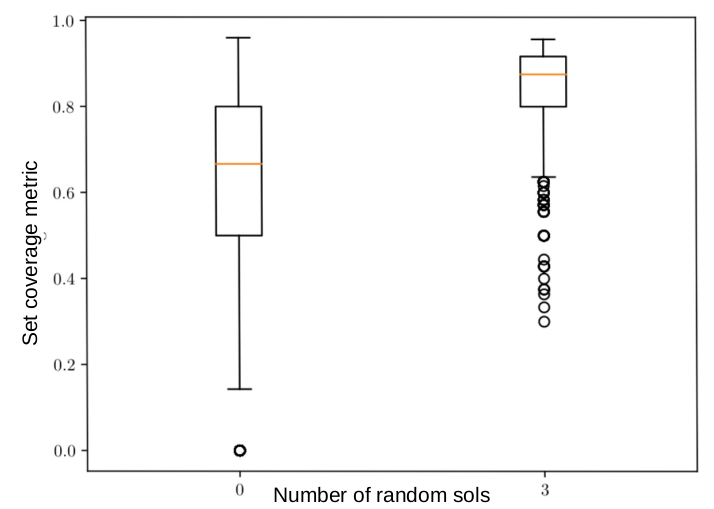
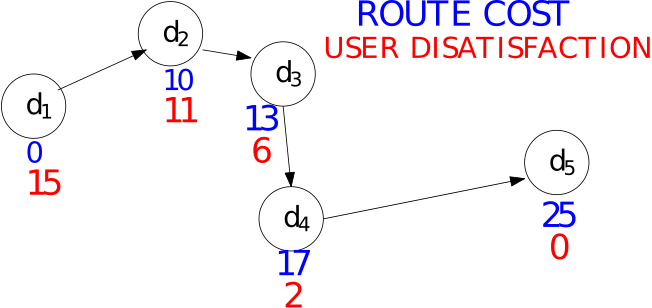
As bicycles are commonly recognized as a fun, cheap and eco-friendly transportation method, bike-sharing systems (BSS) have emerged as a strategy to reduce mobility issues and mitigate environmental impacts arising in large urban areas. The literature described multiple mathematical models and heuristics for the mono-objective problem, but for the multiobjective problem that minimizes the general user’s dissatisfaction and the traveling costs of the redistributing vehicles that for the best of our knowledge, there is no evidence of evolutionary algorithms to deal with this problem. We propose a genetic algorithm. We present positive results comparing different frontiers. We conclude that this kind of developments are necesary for the development of the problem.